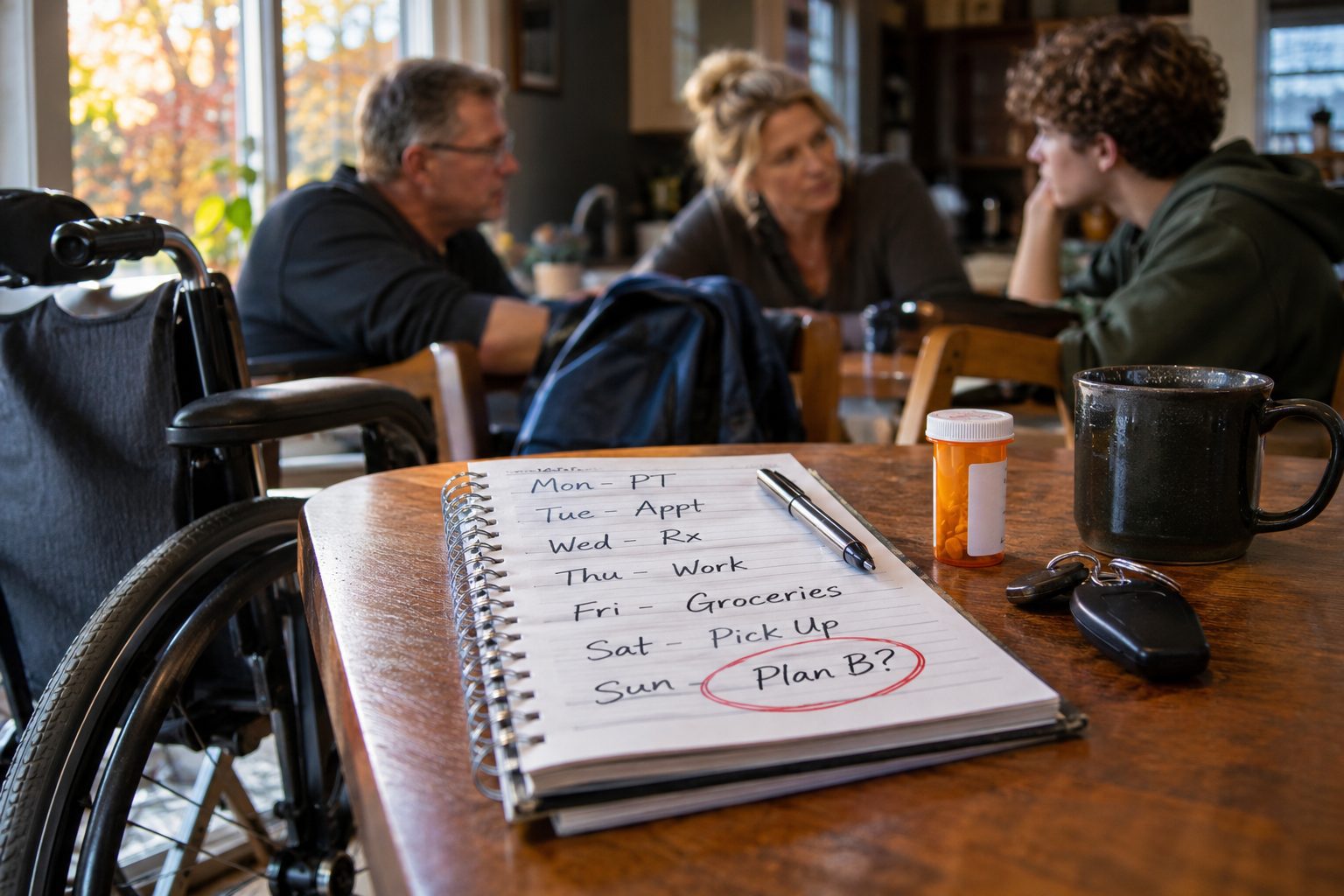
The Family Doesn’t Get a Sick Day
The Pain Between Us | Relationships and Chronic Disability Here’s something I’ve come to understand about chronic disability. My body is labeled with diagnosis, but I and my entire family ...


What kind of person do I become when someone I love makes me angry?
Most of us have a pretty recognizable cast of characters in mind when we think about people who intentionally hurt others. Criminals, bullies, rather smarmy individuals who seem to enjoy making somebody else’s life miserable. We certainly don’t admire them, and we’d be genuinely offended if someone suggested we belonged in their company.
Eventually, you say something that
Rick Elgersma, LMFT
you know will hurt them.
We’re good people, after all, aren’t we? We love our spouses, adore our children, care about our friends, and generally try to treat people well. So how on earth do we explain the things we’re sometimes willing to say and do when somebody we love makes us furious?
Imagine arguing with your spouse about something you’ve discussed a hundred times. You’re frustrated, exhausted, and increasingly convinced they couldn’t possibly care about your feelings. Eventually, you say something that you know will hurt them. Something personal, perhaps something they’ve trusted you enough to share.
And you meant to hurt them.
Eventually, you say something that you know will hurt them.
That’s the part I want us to think about. We’ve intentionally caused another person pain, and somehow we’ve managed to convince ourselves that doing so was perfectly justified.
I’ve noticed how easily we can begin treating good intentions as something people must earn from us.
You disappointed me, so I don’t owe you consideration. You embarrassed me, so I have every right to embarrass you. You’ve hurt me often enough that I no longer feel particularly obligated to protect you from being hurt.
Somewhere along the way, I’ve decided that your behavior gives me permission to abandon my own values. And the more disappointed I become, the more reasonable my decision to act against you seems.
Listen to yourselves.
You have spent years developing your character, figuring out what you believe, learning how you want to treat other people, and hopefully becoming someone worth knowing. Yet apparently, you can determine whether any of that matters simply because you deserve to choose what others deserve.
Who gave you that kind of authority over me?
And who gave me permission to surrender it?
I’m not perfect, for sure and while I may be disciplined by people who’s role it is to discipline, I and no other people are deserving of being treated badly, less than … disdained.
I think there’s something profoundly important about deciding what sort of person we intend to become, particularly in the way we treat people who disappoint us.
Our integrity, conscience, compassion, love, and convictions ought to have something to say about how we respond to another human being. Those qualities reflect decisions we’ve made about ourselves, and they deserve considerably more authority than whatever we’re feeling during an argument.
Of course, people can treat us terribly. Some relationships become destructive, and some behavior requires serious confrontation, accountability, boundaries, or even separation. Nobody should interpret good intentions as an obligation to tolerate abuse or make themselves vulnerable to continued mistreatment.
I can protect myself, express anger, refuse destructive behavior, and make difficult decisions about a relationship while maintaining my commitment to treating another person with dignity.
Why would I want somebody else’s poor behavior to determine the quality of my own?
Monique and I founded Real Connections because we love people and believe relationships can become extraordinary places for growth, discovery, and genuine intimacy. A considerable part of that work involves helping people recognize what they’re contributing to the relationships they want so desperately to improve.
And sometimes we have to examine our own intentions with the same seriousness we give the behavior of the person who hurt us.
Was I trying to help you understand something important, or did I want you to suffer because you hadn’t understood me?
Did I confront you because something needed to change, or because I wanted you to feel as miserable as I did?
Those questions deserve an answer, particularly if we consider ourselves good people.
I want the people I love to know that even during our worst disagreements, my intention is to treat them in a way that reflects the person I’ve chosen to become. I may fail, and I’ll certainly have some apologies to make along the way. But I don’t want to become someone who requires another person to behave perfectly before they’re worthy of my good intentions.
Because ultimately, who should decide what kind of person I intend to be toward you?
You, based upon how you treat me?
Or me, based upon the person I’ve decided to become?
Rick Elgersma, LMFT
Real Connections Counseling & Coaching
Connection is never accidental. Neither is disconnection.


